Autograph manuscripts: A look into Bach’s B minor Mass (Bärenreiter)

18.05.2026 Amelia Welland Sheet music

Otherwise known as Holographs, Autograph manuscripts are musical documents written in the composer's hand. These documents represent the culmination of the composer's work, and are often consulted alongside sketches to form modern editions. Holographs often lead very complex lives and can produce a convoluted picture that often requires deciphering.

Rather than simply defining and outlining the parameters of autograph manuscripts, it is more effective to approach the concept through a concrete example. One of the most notoriously complex and still-contested holographs is Bach’s B minor Mass.

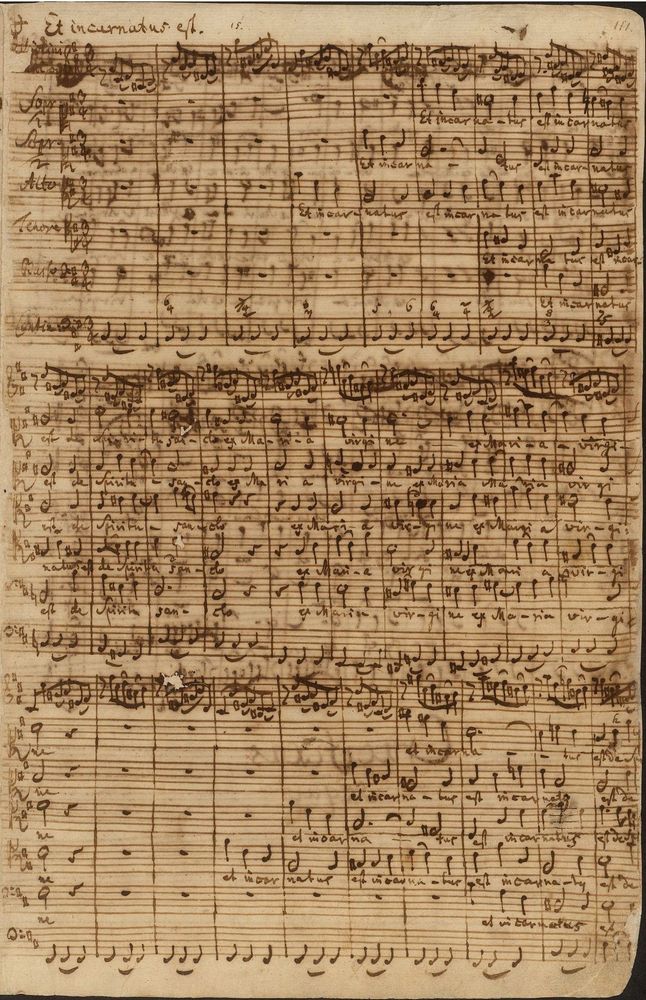
The autograph score for the B minor Mass includes numerous edits, not only by Bach but also by his second wife and his two youngest sons. The work is further complicated by the degeneration of its ink, which required X-ray scans to decipher the handwriting (https://en.wikipedia.org/wiki/Mass_in_B_minor). Taken together, these layers of physical deterioration and multiple revisions make it difficult to distinguish the composer’s original intentions from later interventions, providing important context for understanding the significance of the editorial work undertaken by his sons.

While there is still some debate over W. F. Bach's edits to the work, it is widely recognised that C. P. E. Bach made extensive corrections to it prior to its 1786 performance in Hamburg (Wollny, 2016, 29). In order for this performance to go ahead, C.P. E had to ensure the work was ready for publication and that all the underlays, clefs, and tempo markings were correct. Most of his edits can be found in the Symbolum Nicenum, where gaps in the score needed to be filled (Wollny, 2016, 29). What is peculiar about this work is that Bach’s own writing involves numerous mistakes and holes, including missing underlays and incorrectly transposed keys. For instance, the Missa was originally written in C minor and thus had to be transposed; the result was somewhat confused, requiring the intervention of C. P. E. Bach at a later date (Butt, 1991, 111-112).

You may now ask, but how could the genius that is Bach make such mistakes? In contemporary musicological research, it is widely held that by the time of the B minor Mass, Bach’s neurological disease had advanced significantly. With this reduction in mental capacity, Bach made far more errors than he had previously, leading his sons to make substantial edits and corrections (Wollny, 2016, 31). The two pieces most affected by this were the Missa and the Symbolum Nicenum.

Although C. P. E. was the primary ‘editor’ of the mass, W. F. Bach made later alterations, which have been theorised by Wollny to have been the result of producing individual parts for publication (Wollny, 2016, 43). W. F. Bach’s contributions are confined to the Symbolum Nicenum, where he was found to have added multiple tempo markings, including the ‘Confiteor’ and the ‘Et expecto’ (Wollny, 2016, 30). These more practical annotations are suggested to have been added to clarify the work's performance instructions. Scholars identified these annotations by cross-referencing W. F. Bach's earlier edits to The Art of Fugue (Wollny, 2016, 40).

Outside of his sons, Bach himself had substantial revisions to the B minor mass before his death. One significant change was the addition of Et incarnatus est ‘between the Et in unum and the Crucifixus’ (Butt, 1991, 112). This was a significant alteration to the work, which required the addition of a four-bar instrumental opening in the Crucifixus to avoid the direct continuation of the vocal line. Such momentous alterations, combined with the correction of multiple errors and gaps in the score, reveal the complex lives of holographs such as the B Minor Mass.

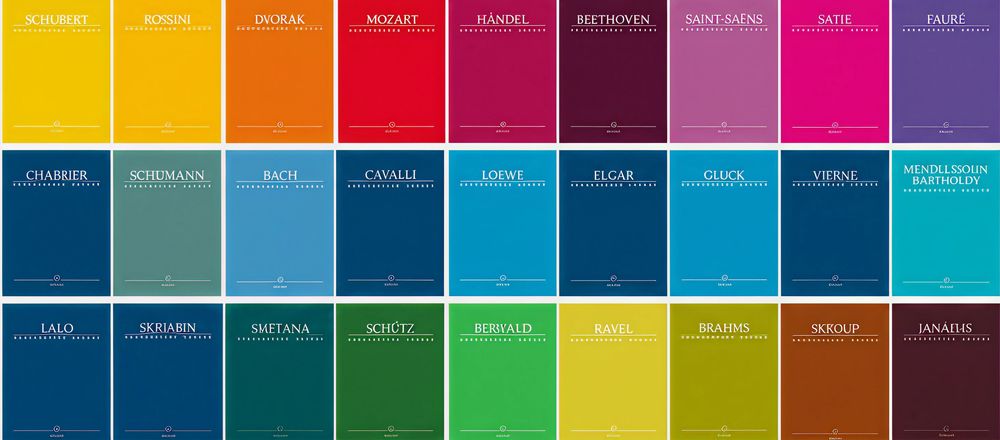
With the splintered life of the B Minor Mass in mind, it is perhaps worth looking for these alterations and edits yourself. Explore Bärenreiter’s edition of the work here: https://www.nkoda.com/publishers/Bärenreiter
(1) Butt, J. (1991). “Bach's Mass in B Minor: Considerations of Its Early Performance and Use”, The Journal of Musicology, 9(1), pp. 109-123.

(2) Wollny, P., Translated by Brokaw, J. (2016). “Observations on the Autograph of the B-Minor Mass.” Bach 47(2), pp. 27–46.

Share this article

Related Articles

The life of Critical Editions

The life of Critical Editions

Critical editions are scores which utilise multiple iterations of a work to create the most ‘complete’ version of that work. In this article, I will explore these unique editions, relating them to ideas of musical fidelity and concepts of editorial judgement.

Sheet music
By Amelia Welland

Understanding Urtext Editions

Understanding Urtext Editions

Across the centuries, music scores have evolved from facsimiles to critical editions and, more recently, to graphic forms. Among these score types are ‘urtext’ editions, which attempt to ratify and uphold the composer’s intention as accurately and precisely as possible. In this article, I will explore Urtext editions and their relationship to concepts of authenticity and editorial manipulation: topics that remain disputed today.

Sheet music
By Amelia Welland

Autograph manuscripts: A look into Bach’s B minor Mass (Bärenreiter)

Autograph manuscripts: A look into Bach’s B minor Mass (Bärenreiter)

Otherwise known as Holographs, Autograph manuscripts are musical documents written in the composer's hand. These documents represent the culmination of the composer's work, and are often consulted alongside sketches to form modern editions. Holographs often lead very complex lives and can produce a convoluted picture that often requires deciphering.

Sheet music
By Amelia Welland

Bärenreiter Verlag on nkoda

Bärenreiter Verlag on nkoda

The Bärenreiter collection is known for its unique musicological notes and rigorously researched Urtext editions. This commitment to scholarly accuracy has been central to the company’s identity since its earliest days. These principles were first introduced by Karl Vötterle, who founded the company in 1923.

Sheet music
By Amelia Welland

A circle has been completed

A circle has been completed

Richard Charkin on nkoda.

Sheet music
By Richard Charkin

How to transpose music

How to transpose music

Finding transposition confusing? We’ve all been there. This guide should put an end to the head-scratching.

Sheet music
By Ben Maloney

Music theory & sheet music cheat sheet

Music theory & sheet music cheat sheet

Musicians need something that will answer all the basic questions, quickly and reliably, anywhere and anytime. Enter the cheat sheet.

Sheet music
By Ben Maloney

The history of sheet music and music notation

The history of sheet music and music notation

The iconic symbols. Where did they come from? What do they mean? And how did they come to articulate an unspoken language understood by millions around the world?

Sheet music
By Ben Maloney

How to memorise music (10 quick tips)

How to memorise music (10 quick tips)

Here are a few things that will help you to memorise music more effectively and bring your musical goals within reach.

Sheet music
By Ben Maloney

How to practise reading sheet music

How to practise reading sheet music

This article is designed to help you to structure your sheet music practice. It’s intended for players who are relatively new to this territory, and are trying to develop some fluency in interpreting notes on the page...

Sheet music
By Ben Maloney

How long does it take to learn to read music?

How long does it take to learn to read music?

Reading sheet music is something that you can absolutely teach yourself to do. You don’t need to receive tuition, whether at school or in private. There’s a world of information out there that’ll tell you everything you need to know, every step of the way. But how long does it take?

Sheet music
By Ben Maloney

How to read music faster and improve sight reading

How to read music faster and improve sight reading

This article takes a look at the craft of reading sheet music quickly and effectively, which is the foundation of good sight reading. Soon you’ll be able to read through a whole opera in the blink of an eye...

Sheet music
By Ben Maloney

How to publish sheet music

How to publish sheet music

If you’re thinking about publishing sheet music, then you can find out more below about these options available to you. But whichever route you decide to pursue, there’s one thing that you're encouraged to keep in mind…

Sheet music
By Ben Maloney

How to store sheet music and organise it

How to store sheet music and organise it

Sheet music can be stored on shelves, in filing cabinets, and even digitally. It's important to organise your collection effectively, in a way that makes sense to you, minimises the risk of damage, maximises space, and facilitates easy access. “How do I store sheet music?” It might seem like a simple question, but any musician who has even the most modest collection will know the horror of an unsightly stack of papers on a piano stool...

Sheet music
By Ben Maloney

Best places to find and buy sheet music

Best places to find and buy sheet music

Anyone who uses sheet music has to first get hold of it, but that isn’t always easy. And the fact that there are more sources of sheet music out there than ever hasn’t necessarily made things simpler. Different musicians have different needs, so there are no straightforward, general answers to this question. It all comes down to what sheet music you’re after and how you use it...

Sheet music
By Ben Maloney