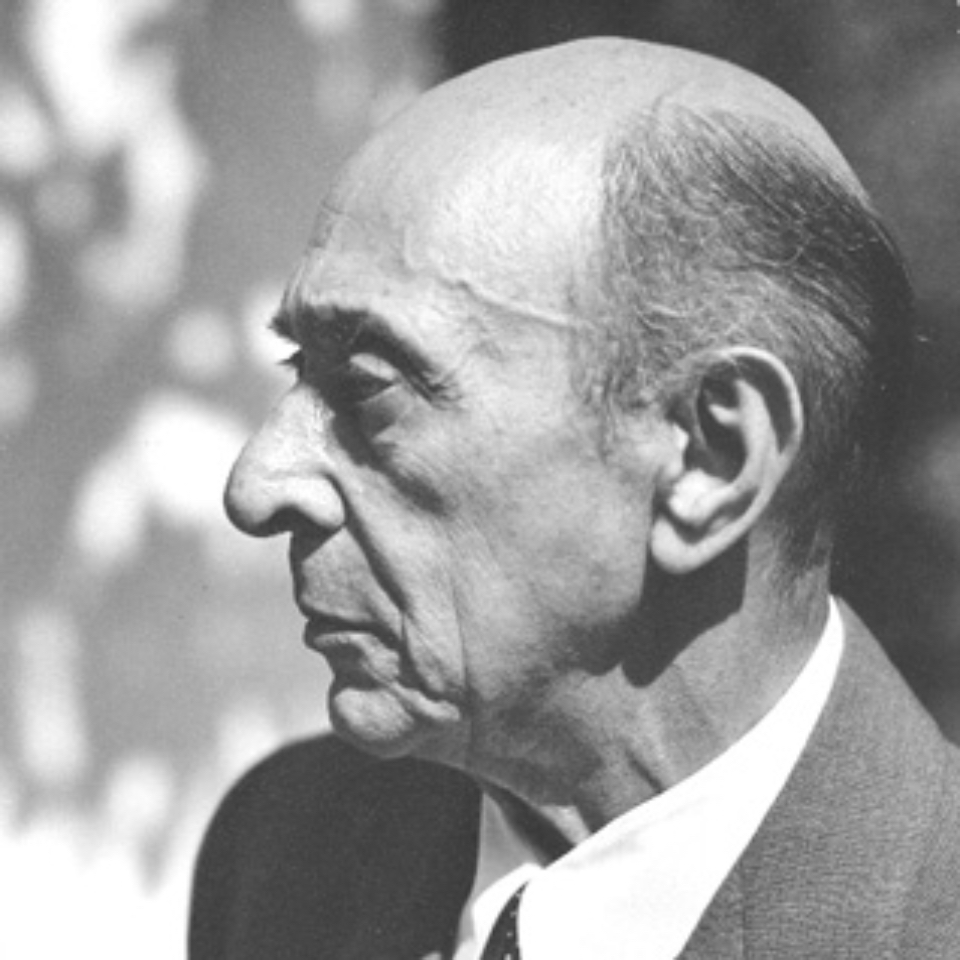
Arnold Schoenberg
20 pieces at nkodankoda sheet music library
over 100k editions from $14.99/month
Hassle-free. Cancel anytime.
available on

nkoda digital sheet music subscription

Editions
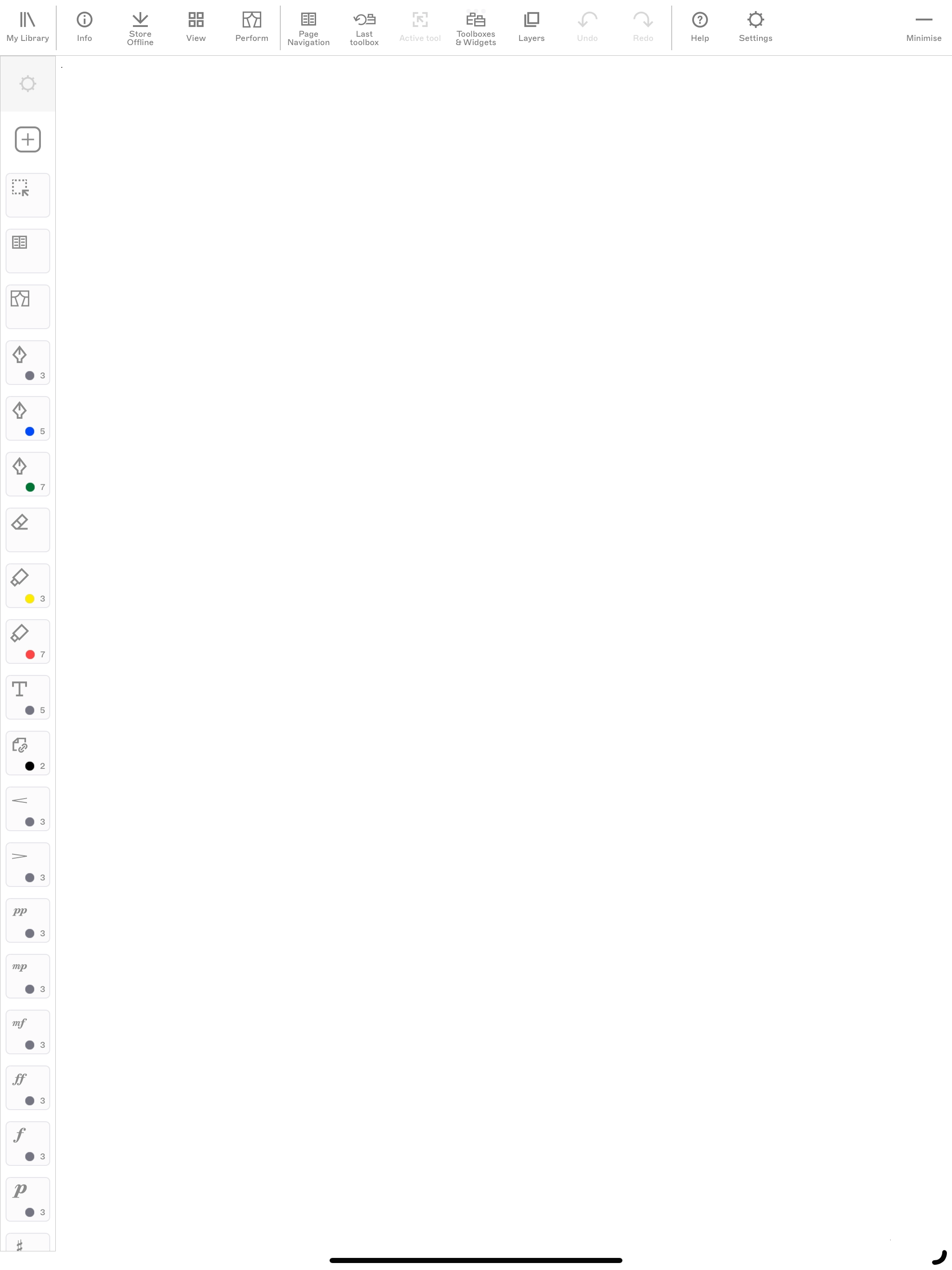
Annotate
Library
Perform
100k+ available Editions
More about Arnold Schoenberg
In 1933, shortly before his 60th birthday, Arnold Schoenberg, one of the most important composers in history, was forced to flee his native Europe due to the increasing Nazi terror. He came to America, where he taught briefly at Boston's Malkin Conservatory before moving to Los Angeles for reasons of health in October 1934. There he taught privately, as well as at the University of Southern California and the University of California at Los Angeles. The name Schoenberg is inextricably linked in most people's minds with serialism and The Second Viennese School. However, a number of the works he wrote during his "American" period are quite different in flavor. They embrace a return, in varying degrees, to "tonality," for they use within their serial structures triadic elements and tonal implications. The Chamber Symphony No. 2 (1939) integrates the warm, rich harmonies of late Romanticism with transparent textures and a rhythmically lively, almost neo-classic spirit. Additionally, several of these tonal works are based on baroque models. "A longing to return to the older style [of music] was always vigorous in me; and from time to time I had to yield to that urge," Schoenberg wrote in his 1948 essay One Always Returns. These fascinating pieces include Suite for String Orchestra (1934), written in the form of a baroque suite, and the brilliant "recompositions" Concerto for Cello (1933) (based on the harpsichord concerto by Georg Matthias Monn, 1746), and Concerto for String Quartet and Orchestra (1933) (after Handel's Concerto Grosso Op. 6 No. 7). They are "complex, free-wheeling elaborations of 18th-century source materials," Joseph Horowitz has written, "tonal yet reflecting...Schoenberg's 12-tone craftsmanship." Schoenberg's use of tonal materials in these works does not imply, however, that he had repudiated serialism or his revolutionary theoretical ideas; in them he merely transformed the triad's harmonic function and significance.

Arnold Schoenberg sheets music on nkoda
Edition/Parts
Composer/Artist
Part
Source
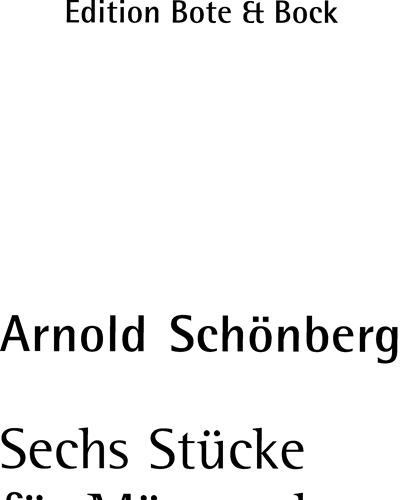
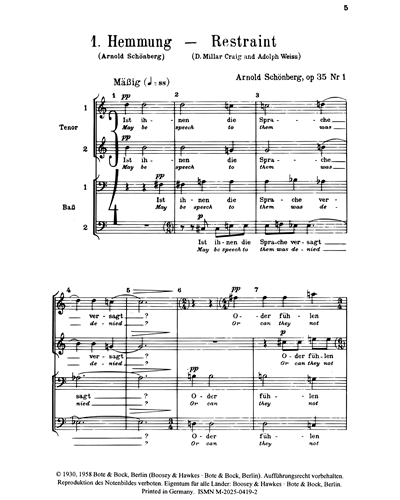
Six Pieces, op. 35
Arnold Schoenberg
Chorus Score
Bote & Bock
Chamber Symphony No. 2, op. 38
Arnold Schoenberg
Orchestra
G Schirmer
Five Piano Pieces, op. 23
Arnold Schoenberg
Piano
Edition Wilhelm Hansen
Serenade, op. 24
Arnold Schoenberg
Full Score
Edition Wilhelm Hansen
Sonnet No. 217 (After Petrarca)
Arnold Schoenberg
Low Voice & Piano
Edition Wilhelm Hansen
Lied (ohne Worte)
Arnold Schoenberg
Violin & Piano
Edition Wilhelm Hansen
Sonnet No. 217 (After Petrarca)
Arnold Schoenberg
Cello & Violin & Piano
Edition Wilhelm Hansen
Lieder, op. 2
Arnold Schoenberg
Ensemble
Edition Wilhelm Hansen
Four Pieces (from '6 kleine klavierstücke')
Arnold Schoenberg
Orchestra
Edition Wilhelm Hansen
Novello Short Biographies
Christopher Small
Biography
Novello & Co
Suite
Arnold Schoenberg
Strings
G Schirmer
Five Orchestral Pieces, op. 16
Arnold Schoenberg
Full Score
Eulenburg
INSTITUTIONAL PARTNERS


PUBLISHERS PARTNERS


TESTIMONIALS